
Why Jeffersonville Manufacturers Need a Fractional Sales Manager Before They Add More Reps
Jeffersonville manufacturers keep hiring reps and wondering why revenue doesn't follow. The problem isn't the reps — it's the absence of a sales system. Here's what a fractional sales manager actually fixes.


The Hire-a-Rep Reflex
When a Jeffersonville manufacturer's revenue stalls, the instinct is almost always the same: hire another rep.
It's understandable. More reps should mean more calls, more proposals, more deals. The logic feels airtight until you've done it twice and watched the same pattern repeat — a new hire who starts strong, loses momentum by month four, and is gone by month nine.
The problem isn't the reps. It's what they're walking into.
Most Jeffersonville manufacturers don't have a sales system. They have a founder who knows how to sell, a handful of reps who've figured out their own approach, and a CRM that nobody trusts. When you add a rep to that environment, you're not adding capacity — you're adding another person to a process that doesn't exist.
A fractional sales manager fixes the environment before you add more people to it.
What's Actually Broken in Most Jeffersonville Manufacturing Sales Operations
Before diagnosing the solution, it helps to name the specific problems that show up repeatedly in manufacturing B2B sales:
No defined pipeline stages. Reps move deals through their own mental model of "warm," "hot," and "almost closed." There's no shared language for where a deal actually is, which means forecasts are guesses and coaching is impossible.
Discovery that doesn't go deep enough. Technical products require technical discovery — understanding the buyer's process, their constraints, their decision criteria, and who else is involved. Most reps skip this because nobody taught them how to do it. They go straight to the product pitch and wonder why proposals don't convert.
Proposals that compete on price. When you haven't done the discovery work, you can't build a proposal around value. You build it around specs and price, and then you lose to whoever is cheapest. Jeffersonville manufacturers with genuinely differentiated products lose deals they should win because their sales process doesn't surface the differentiation.
No accountability structure. Without a manager reviewing pipeline, coaching on deals, and holding reps to activity standards, performance drifts. The reps who are self-motivated stay productive. Everyone else coasts.
Founder dependency. The founder closes the big deals. The reps close the small ones. The company can't scale because the founder is the sales system — and the founder has a company to run.
What a Fractional Sales Manager Actually Does
A fractional sales manager isn't a consultant who delivers a report. They're an embedded sales leader who runs your sales operation on a part-time basis.
In a Jeffersonville manufacturing context, that typically means:
Building the sales process. Defining pipeline stages that match your actual sales cycle — from first contact through technical evaluation, proposal, and close. Creating the discovery framework your reps use on every call. Establishing the criteria that move a deal from one stage to the next.
Running pipeline reviews. Weekly or biweekly reviews where every active deal gets examined — where it is, what's needed to advance it, what the risks are. This is where the accountability structure lives.
Coaching on deals and skills. Sitting in on calls, reviewing proposals, debriefing after wins and losses. Building rep capability over time rather than just inspecting results.
Fixing the CRM. Getting the pipeline into a state where it reflects reality, then keeping it there. A CRM that nobody trusts is worse than no CRM — it creates false confidence and bad forecasts.
Owning the forecast. Giving you a number you can actually plan around, with the reasoning behind it.
The engagement runs on a retainer — typically $3,500–$5,000 per month — and the fractional manager is present enough to actually run the operation, not just advise on it.
The Manufacturing Sales Cycle Is Different
This matters for Jeffersonville specifically. Manufacturing B2B sales cycles are longer, more complex, and involve more stakeholders than most service business sales.
A deal might take six to eighteen months from first contact to purchase order. It might involve an engineer, a procurement manager, an operations director, and a CFO — each with different concerns and different criteria. The proposal might need to address technical specifications, lead times, quality certifications, and total cost of ownership simultaneously.
A sales process built for a service business doesn't work here. The pipeline stages are wrong. The discovery questions are wrong. The proposal structure is wrong.
A fractional sales manager who understands manufacturing builds the process for your actual sales cycle — not a generic template.
When to Bring In a Fractional Sales Manager
The right time is before you hire the next rep. Specifically, when:
- You have 2–5 reps and no one is managing them consistently
- Your pipeline is a list of company names with no real stage discipline
- You're losing deals you should win and don't know why
- Your best rep is about to leave and you realize the sales knowledge lives in their head, not in a system
- You're about to pursue larger regional accounts and know your current process won't get you there
The wrong time is after you've already hired two more reps and are hoping the problem solves itself.
The Cost Comparison
A full-time sales manager in the Jeffersonville market runs $130,000–$180,000 in base salary, plus benefits, payroll taxes, and overhead. Fully loaded, you're looking at $150,000–$200,000 per year before you've gotten any results.
A fractional sales manager engagement runs $3,500–$5,000 per month — $42,000–$60,000 per year — and you're getting the same caliber of leadership applied to your specific situation.
For a manufacturer with $3–10M in revenue, the fractional model is almost always the right answer. You get the process and accountability you need without the overhead of a full-time hire you may not be ready to support.
What This Looks Like for a Jeffersonville Manufacturer
Here's a realistic picture of what the first 90 days looks like:
Month 1: Audit the current state — pipeline, CRM, rep activity, win/loss patterns, discovery quality. Build the sales process framework specific to your product and sales cycle.
Month 2: Implement the process. Run the first pipeline reviews. Start coaching reps on discovery and proposal discipline. Fix the CRM.
Month 3: The pipeline starts reflecting reality. Reps are using a consistent process. You have a forecast you can plan around. The founder is no longer the only person who can close a deal.
That's not a transformation — it's a foundation. The compounding happens in months four through twelve as the process becomes habit and rep capability builds.
The Alternative
The alternative is hiring another rep and hoping this one is different.
Some of them are. But even a great rep in a broken environment eventually adapts to the environment. They find the path of least resistance. They work the easy deals. They avoid the hard ones that require a process they don't have.
The system shapes the behavior. Fix the system first.
If you're a Jeffersonville manufacturer thinking about your next sales hire, read about why Jeffersonville B2B companies need a documented sales process before they scale and how Jeffersonville companies break into regional accounts.
Or if you're ready to talk about what's actually holding your revenue back, start with a conversation.
See what fractional sales leadership costs compared to a full-time hire — and what the Jeffersonville hub page covers about our work in the market.
Also see:
- Interim Sales Manager Jeffersonville — how the fractional model works for Southern Indiana B2B
- Fractional Sales Manager
- Outsourced Sales Manager
- Interim Sales Leadership
- Fractional VP of Sales
Explore Topics
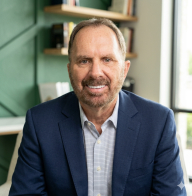
Written by
Leaman Griffin
Fractional Sales Leader, Fractional Uplifts
Fractional sales leader with 30+ years of B2B experience — from individual contributor to VP of Sales to Divisional President. Leaman has built and scaled sales teams from 1 to 100+ reps across distribution, manufacturing, and professional services. He works embedded with Louisville-area founders and executives who need experienced sales leadership without the full-time cost.
More about Leaman

