
How Jeffersonville B2B Companies Break Into Regional Accounts
Jeffersonville companies that have won local accounts often hit a wall when they try to break into Louisville, Cincinnati, or Indianapolis. The problem isn't the product — it's the sales leadership gap between local selling and regional account pursuit.


The Local Ceiling
Most Jeffersonville B2B companies that come to us have the same story.
They've built a solid local business. They have good customers in Clark County, Floyd County, and the immediate Southern Indiana market. Revenue is real. The product or service is genuinely good. The founder has relationships that have sustained the business for years.
And then they try to break into Louisville. Or Cincinnati. Or Indianapolis. And it doesn't work.
Not because the product isn't good enough. Not because the market isn't there. But because the way they sell locally — relationship-driven, founder-dependent, reactive — doesn't work for regional account pursuit.
Regional accounts require a different kind of sales operation. This article is about what that looks like and what it takes to build it.
Why Local Selling Doesn't Scale to Regional Accounts
Local selling in a market like Jeffersonville works through proximity and relationships. The founder knows people. Referrals come in. The sales cycle is short because trust is already established. The process is informal because it doesn't need to be formal — everyone knows everyone.
Regional account pursuit is structurally different:
You're unknown. In Louisville, Cincinnati, or Indianapolis, you don't have the relationship network that makes local selling work. You're competing against vendors who've been in those markets for years. Trust has to be built from scratch, through the sales process itself.
The deals are bigger and more complex. Regional accounts — a Louisville manufacturer, a Cincinnati distributor, an Indianapolis logistics company — are larger organizations with more stakeholders, longer evaluation cycles, and more formal procurement processes. The informal approach that closes a $50,000 local deal doesn't work on a $500,000 regional one.
The competition is different. Local competitors know the same people you do. Regional competitors have sales teams, marketing, and account management infrastructure. You're competing on a different playing field.
The sales cycle is longer. A local deal might close in a few weeks. A regional account might take six to eighteen months from first contact to purchase order. That requires a different kind of pipeline management and a different kind of persistence.
The Sales Leadership Gap
The gap between where most Jeffersonville companies are and where they need to be to win regional accounts is a sales leadership gap — not a product gap, not a marketing gap, not a pricing gap.
Specifically, what's missing is:
Account targeting discipline. Which regional accounts are actually worth pursuing? Not every company in Louisville is a good fit. Identifying the right targets — based on size, industry, buying cycle, strategic fit — and building a prioritized list is the starting point. Most companies skip this and pursue whoever responds to their outreach, which produces a lot of activity and few results.
Multi-stakeholder navigation. Regional accounts have multiple decision-makers. The person who takes your first call is rarely the person who approves the purchase. Understanding the org chart, identifying the economic buyer, and building relationships at multiple levels simultaneously is a skill that requires deliberate development.
Executive-level positioning. To win a regional account, you often need to get in front of a VP or C-suite executive — not just a manager or coordinator. That requires a different kind of outreach, a different kind of conversation, and a different kind of value proposition than what works at the operational level.
Long-cycle pipeline management. Keeping a six-to-eighteen-month deal alive requires a systematic follow-up cadence, a clear picture of where the deal is and what's needed to advance it, and the judgment to know when to push and when to wait. Without a process for this, deals die in the gaps.
Competitive positioning. Regional accounts are evaluating multiple vendors. You need to know who you're competing against, what their strengths and weaknesses are, and how to position your offering against them. This is strategic work that most founder-led sales operations don't do.
When You Need a Fractional VP of Sales
For most Jeffersonville companies pursuing regional accounts, the right move is a fractional VP of sales — not a fractional sales manager.
The distinction matters. A fractional sales manager runs the day-to-day sales operation — pipeline reviews, rep coaching, process enforcement. That's the right solution when the problem is execution.
Regional account pursuit is a strategic problem. It requires:
- Defining the go-to-market strategy for the regional market
- Building the account targeting framework
- Developing the value proposition for a different buyer profile
- Designing the sales process for a longer, more complex cycle
- Potentially restructuring the sales team or adding capability
That's VP-level work. A fractional VP of sales brings that strategic capability at a fraction of the cost of a full-time hire — typically $5,000–$8,000 per month versus $150,000–$200,000 in base salary for a full-time VP.
For companies that need both strategic direction and day-to-day execution, the fractional VP can also own the management function — or can work alongside a fractional sales manager who handles the operational side.
The I-65 Corridor Opportunity
Jeffersonville's geography is an asset that most companies underutilize.
The I-65 corridor connects Jeffersonville directly to Louisville (10 minutes), Indianapolis (2 hours), and Nashville (3 hours). For a manufacturer or B2B service company, that's three major markets within a half-day's drive — each with a distinct economy and distinct buying patterns.
Louisville is the most obvious target — it's across the bridge, and many Jeffersonville companies already have some Louisville customers. But the Louisville market is also the most competitive, with established vendors who've been there for years.
Indianapolis is often underserved by Southern Indiana companies who think of it as "too far." It's not. For a manufacturer with a differentiated product, Indianapolis represents a large market with less competition from local Southern Indiana vendors.
Cincinnati is similar — a two-hour drive, a large industrial economy, and less competition from Jeffersonville-based companies than Louisville.
A regional account strategy that targets all three markets — with different approaches for each based on competitive dynamics and buyer profiles — is more resilient than one that depends entirely on Louisville.
What the First 90 Days Looks Like
For a Jeffersonville company serious about regional account pursuit, the first 90 days of a fractional VP engagement typically looks like this:
Month 1: Market assessment and strategy. Which regional markets to prioritize. Which accounts to target within those markets. What the competitive landscape looks like. What the value proposition needs to be for a regional buyer versus a local one.
Month 2: Process and infrastructure. Building the sales process for a longer, more complex cycle. Setting up the account targeting list and outreach cadence. Defining the pipeline stages and management rhythm for regional pursuit.
Month 3: Execution and learning. First outreach to target accounts. First pipeline reviews on regional deals. First adjustments based on what's working and what isn't.
By the end of 90 days, you have a strategy, a process, and early pipeline. You're not closing regional accounts yet — those cycles are too long — but you have a system that will produce results over the following six to twelve months.
The Connection to Process and Leadership
Regional account pursuit doesn't work without the foundation. If your sales process is undocumented and your pipeline is a list of company names, you're not ready to pursue regional accounts — you'll just add more complexity to an already broken operation.
The sequence matters:
- Document and implement the sales process (why Jeffersonville manufacturers need a documented sales process)
- Build the management and accountability structure (why Jeffersonville manufacturers need a fractional sales manager)
- Add the strategic layer for regional account pursuit
Some companies can compress steps one and two — or do them simultaneously with the right fractional leader. But skipping them and going straight to regional pursuit is the most common reason regional expansion efforts fail.
Starting the Conversation
If you're a Jeffersonville B2B company that has won locally and is ready to pursue regional accounts, the starting point is an honest assessment of where your sales operation actually is — not where you think it is.
That assessment usually reveals that the foundation work (process, pipeline discipline, management structure) needs to happen before or alongside the strategic work (account targeting, competitive positioning, go-to-market for regional markets).
The Jeffersonville hub page covers the full range of what we do in the market. See what fractional sales leadership costs at different levels of engagement.
If you're ready to talk about what regional account pursuit actually requires for a company like yours, start with a conversation.
Also see:
- Interim Sales Manager Jeffersonville — how the fractional model works for Southern Indiana B2B
- Fractional Sales Manager
- Outsourced Sales Manager
- Interim Sales Leadership
- Fractional VP of Sales
Explore Topics
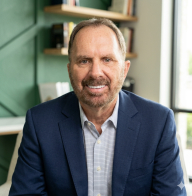
Written by
Leaman Griffin
Fractional Sales Leader, Fractional Uplifts
Fractional sales leader with 30+ years of B2B experience — from individual contributor to VP of Sales to Divisional President. Leaman has built and scaled sales teams from 1 to 100+ reps across distribution, manufacturing, and professional services. He works embedded with Louisville-area founders and executives who need experienced sales leadership without the full-time cost.
More about Leaman

