
From Handshakes to Hyperlinks: Evolving Your B2B Sales Model for the Modern Workforce
The B2B buyer is changing fast. The companies that grow in the next decade will be the ones that build a hybrid sales model — one that preserves the relationship equity of the old guard while meeting the speed, digital, and process expectations of the modern workforce.


From Handshakes to Hyperlinks: Evolving Your B2B Sales Model for the Modern Workforce
The sales leader who built your company's revenue over the last twenty years probably did it the same way. He knew the buyer's kids' names. She remembered the anniversary of the account. They showed up, they stayed in touch, and when a competitor came calling with a lower price, the relationship held. It was not a strategy written in a playbook. It was a way of doing business that worked because the people on both sides of the transaction valued the same things.
That era is not over. But it is sharing the stage with something fundamentally different — and the B2B companies that grow in the next decade will be the ones that figure out how to operate in both worlds at once.
The Relationship Model That Built B2B Sales
Relationship-based selling dominated B2B for decades for a simple reason: information asymmetry. The buyer did not know what things should cost, what alternatives existed, or whether a vendor's claims were credible. The salesperson was the information source. Trust was the currency. And trust was built over time, in person, through repeated interactions that had nothing to do with the product being sold.
This model produced extraordinary results in the right hands. A skilled relationship seller could hold an account for fifteen years through price increases, product failures, and competitive pressure — because the buyer was not just buying a product. They were buying confidence in the person across the table.
The infrastructure that supported this model — long sales cycles, entertainment budgets, annual golf outings, quarterly business reviews over a two-hour lunch — was not inefficiency. It was investment. And for a generation of buyers who valued personal connection and face time as signals of commitment and reliability, it delivered a real return.
The Workforce Is Changing — And So Is the Buyer Seat
The buyer sitting across from your sales team today is increasingly not that person.
Millennials now make up the largest share of the B2B workforce, and Gen Z is entering purchasing roles in growing numbers. These buyers were shaped by entirely different experiences. They grew up with Amazon's one-click purchasing, Google's instant answers, Slack's asynchronous communication, and Uber's frictionless transactions. They did not learn to equate relationship-building with reliability. They learned to equate speed, transparency, and ease of use with trustworthiness.
This is not a character flaw. It is a different set of learned associations — and it has profound implications for how B2B sales works.
The younger buyer does not experience a long lunch as an investment in the relationship. They experience it as an inefficient use of four hours that could have been resolved in a fifteen-minute video call and a well-structured proposal. The phone call that the veteran sales rep uses to "check in and stay top of mind" registers to the millennial procurement manager as an interruption with no clear agenda. The relationship that took three years to build through in-person visits feels, to the Gen Z operations director, like a vendor who has not figured out how to use a customer portal.
What once seemed impersonal — self-service research, digital proposals, e-signature, automated onboarding sequences — now seems not just acceptable but preferable. Speed is not a nice-to-have. It is a signal of competence.
Relationships Are Still Being Built — Just on Different Terms
Here is the critical insight that many veteran sales organizations miss: the new generation of buyers is not rejecting relationships. They are redefining what a relationship looks like from the start.
With the old guard, the relationship was built before the sale — over years of lunches, calls, and shared history. Trust was the prerequisite for doing business. With the new guard, the relationship begins at the first interaction, and it is built through the quality of that interaction itself. A fast, knowledgeable response to an inquiry. A proposal that demonstrates you understood what they actually asked for. A digital experience that respects their time and does not require them to chase you for information.
The new buyer is not asking to skip the relationship. They are asking to build it their way — on their timeline, through their preferred channels, at a pace that fits how they work. The sales organization that understands this does not abandon relationship-building. It rebuilds the on-ramp. The trust that used to accumulate over three years of golf outings now accumulates through three months of frictionless, responsive, competent interactions. The relationship is just as real. The path to it looks completely different.
This means the sales team that wins with the new buyer is not the one that stops caring about relationships. It is the one that earns them faster, through a process that signals competence and respect from the very first touchpoint.
Technology Didn't Just Change the Tools — It Changed the Expectations
The generational shift in buyer behavior did not happen in isolation. It was accelerated by two decades of technological advancement that rewired what "good" looks like in a commercial transaction.
The B2B buyer in 2026 has already done 60 to 70 percent of their research before they speak to a salesperson. They have read your case studies, compared your pricing against competitors, watched your founder's LinkedIn videos, and formed a preliminary opinion about fit — all before your rep sends a single email. By the time they engage, they are not looking for information. They are looking for confirmation and a frictionless path to a decision.
This changes the sales motion fundamentally. The rep who leads with a discovery call designed to educate the buyer on the category is solving a problem the buyer already solved themselves. The rep who can quickly validate the buyer's research, address the specific objections they have already formed, and make the purchase process as fast and low-friction as possible is the one who wins.
Speed to response has become a competitive differentiator in a way it never was in the relationship era. Studies consistently show that response time within the first five minutes of an inbound inquiry increases conversion rates dramatically — not because buyers are impatient, but because they are evaluating multiple vendors simultaneously and the first credible response shapes the comparison. A fractional sales manager who builds a response protocol into the sales process is not just improving efficiency. They are changing the win rate.
The same logic applies to the entire sales cycle. Digital proposals with embedded e-signature, CRM-driven follow-up sequences that keep the deal moving without requiring the rep to remember to call, automated onboarding that gets the customer productive immediately after signing — these are not shortcuts that sacrifice relationship quality. For the modern buyer, they are the relationship. They signal that you respect their time, that your organization is competent, and that working with you will be as easy as the sales process suggested.
Speed to Market, Speed to Response: The New Competitive Moat
If there is one principle that unifies the transactional buyer's expectations, it is speed. Speed of response to an inquiry. Speed of proposal delivery. Speed of contract execution. Speed of onboarding. Speed of resolution when something goes wrong.
This is not impatience. It is a rational response to a world where alternatives are always one search away and switching costs are lower than they have ever been. The buyer who does not hear back from you within an hour of submitting a contact form is not waiting. They are evaluating your competitor.
Building speed into the sales process requires infrastructure — and infrastructure requires leadership. A fractional VP of sales who has built response protocols, CRM automation, and proposal workflows at multiple companies can compress the time it takes to build this infrastructure from eighteen months to ninety days. A fractional sales manager who owns the day-to-day execution of the process ensures that the infrastructure actually gets used, rather than sitting in a playbook that nobody reads.
For companies that are still operating on the relationship model's timeline — where deals move at the pace of the next scheduled lunch — the speed gap is not just a competitive disadvantage. It is an existential one. The buyers who would have waited for the relationship are retiring. The buyers who are replacing them will not.
Why the Old Guard's Relationships Still Have Real Value
None of this means relationship selling is dead. It means it needs to be deployed more strategically.
The veteran sales professional who has spent twenty years building trust with senior executives in a specific industry still holds something that cannot be replicated by a CRM sequence or a well-designed proposal template. They have access. They have credibility. They can get a meeting that a cold email never will. They can navigate the political complexity of a large account in ways that no amount of digital sophistication can substitute for.
The mistake is assuming that because the younger buyer prefers a different interaction style, relationship capital has no value. It has enormous value — in the right situations. Complex enterprise deals with long decision cycles and multiple stakeholders still require human judgment, trust, and the ability to read a room. Accounts that are at risk of churning often need a senior relationship intervention that no automated sequence can provide. New markets where your brand has no recognition still benefit from a warm introduction from someone who has been in the industry for decades.
The greying sales force is not a liability. It is an asset that is being deployed incorrectly when it is asked to operate the same way it did in 1998. The relationship skills, the industry knowledge, the executive access — these are genuinely valuable. The question is how to combine them with the process infrastructure and digital fluency that the modern buyer expects.
Building the Hybrid Model: Where Process Meets Relationship
The sales organization that wins in 2026 is not purely transactional and not purely relational. It is a hybrid that meets buyers where they are — and different buyers are in different places.
The practical architecture of this hybrid model has several components.
Segment your buyers by preference, not just by deal size. Some of your largest accounts are run by executives who still value the relationship model. Some of your smallest accounts are run by digital-native operators who want to self-serve as much as possible. Treating all buyers the same way — either all relationship or all transactional — leaves value on the table in both directions.
Build the digital infrastructure that serves the transactional buyer without dismantling the relationship infrastructure that serves the relational buyer. This means a CRM that actually reflects reality, a proposal process that can move fast when the buyer is ready to move fast, a response protocol that ensures no inbound inquiry waits more than a few minutes for a human reply, and a digital content library that supports the buyer who wants to research independently before engaging.
Preserve the relationship touchpoints that have genuine ROI — and eliminate the ones that are habit rather than strategy. The quarterly business review that a senior executive genuinely values is worth protecting. The annual golf outing that three of your four attendees would rather skip is a budget line that could be redeployed into digital infrastructure that serves ten times as many buyers.
Use technology to extend relationship capacity, not replace it. A well-configured CRM reminds the veteran rep that a key contact just changed roles — which is exactly the moment to reach out. Marketing automation keeps the brand present with buyers who are not yet ready to engage, so the relationship seller can focus their personal time on the accounts where human interaction creates the most value.
What This Means for Your Sales Team Composition and Leadership
The generational transition in the buyer seat is mirrored by a generational transition in the sales force itself — and managing both simultaneously is one of the more complex challenges facing B2B sales leaders today.
The veteran rep who built the book of business on relationships needs coaching on digital fluency, response speed, and the process discipline that the modern buyer expects. They are not resistant to change because they are stubborn. They are resistant because the behaviors that made them successful for twenty years are being devalued in ways that feel arbitrary and disrespectful of what they built.
The younger rep who is comfortable with technology, CRM discipline, and digital-first outreach needs coaching on the patience, listening skills, and relationship depth that close complex deals and retain accounts through adversity. They are not shallow. They simply have not had twenty years of experience watching a relationship save an account that should have churned.
The sales organization that figures out how to transfer knowledge between these two cohorts — using the veterans as mentors for relationship skills and the younger reps as internal resources for digital fluency — builds a capability that neither group has alone.
An outsourced sales manager or fractional sales manager can play a critical role in this transition. They bring the external perspective to see the dynamic clearly, the credibility to coach both cohorts without the political baggage of an internal hire, and the process expertise to build the hybrid infrastructure that neither generation would design on their own.
For a deeper look at how this leadership role functions in practice, see What Is a Fractional Sales Manager and The First 90 Days of a Fractional Sales Manager.
The Fractional Sales Leader as the Architect of This Transition
The transition from a relationship-based model to a hybrid model is not a training initiative. It is a strategic transformation — and it requires leadership that has navigated it before.
A fractional VP of sales brings the strategic architecture: the go-to-market design, the buyer segmentation, the technology stack decisions, the compensation structure that rewards the right behaviors across both cohorts. They have seen what works and what does not, and they can compress the learning curve that an internal hire would spend two years climbing.
A fractional sales manager translates the strategy into daily execution: the CRM discipline, the response protocols, the coaching cadence, the pipeline reviews that keep the team accountable to the new model while respecting the relationship equity that the veterans have built.
An outsourced sales manager bridges the gap during the transition itself — providing the senior-level sales capacity to keep revenue moving while the internal team is being rebuilt around the hybrid model. For companies mid-transition, this is often the most practical entry point: bring in an outsourced sales manager to hold the revenue line while the fractional VP designs the new architecture.
For more on how these roles compare and when to use each, see Fractional VP of Sales vs. Fractional Sales Manager and Fractional vs. Outsourced Sales Manager.
The companies that navigate this transition successfully will not be the ones that abandon relationships in favor of technology, or that cling to the relationship model while their buyers move on. They will be the ones that build a sales organization capable of meeting every buyer where they are — with the speed, process, and digital fluency that the modern workforce demands, and the relationship depth and human judgment that no technology will ever fully replace.
The handshake still matters. It just needs a hyperlink to back it up.
Ready to build a sales model that works for both generations of buyers? Book a discovery call or contact us to talk through what fractional sales management could look like for your business.
Related reading: Sales Strategy hub · How to Build a B2B Sales Strategy That Scales · The Economics of Lead Quality
Also see:
Explore Topics
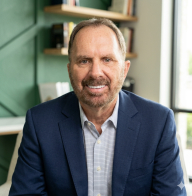
Written by
Leaman Griffin
Fractional Sales Leader, Fractional Uplifts
Fractional sales leader with 30+ years of B2B experience — from individual contributor to VP of Sales to Divisional President. Leaman has built and scaled sales teams from 1 to 100+ reps across distribution, manufacturing, and professional services. He works embedded with Louisville-area founders and executives who need experienced sales leadership without the full-time cost.
More about Leaman
