
Outsourced Sales Manager Lexington KY: When a Founder Needs to Get Out of Sales
The Lexington founders who need an outsourced sales manager are usually good at sales. That is the problem. Here is what founder-led sales dependency looks like — and how an outsourced sales manager fixes it.


There is a specific kind of Lexington founder who needs an outsourced sales manager.
They are good at sales. That is the problem.
They closed the first ten clients themselves. They know the equine industry, or the healthcare procurement process, or how to navigate UK Athletics vendor relationships. They are the reason the company has revenue. And now they cannot get out.
Every deal still needs them. Every rep still escalates to them. Every stalled opportunity gets forwarded to their inbox with a "can you jump on a call?" The founder is not running a business. They are running a sales team that cannot function without them.
An outsourced sales manager is the specific solution to this specific problem. Here is when it applies — and when it does not.
What "Founder-Led Sales" Actually Means at This Stage
Founder-led sales is not a strategy. It is a phase. It works when the company is small enough that the founder can personally touch every deal, and when the founder's credibility and relationships are the primary reason clients say yes.
Most Lexington B2B companies stay in this phase too long. The signs are recognizable:
- The founder is on every significant sales call
- Reps bring deals to a certain stage and then hand them to the founder to close
- The pipeline is accurate only when the founder has personally reviewed it
- Revenue is predictable only to the extent that the founder's calendar is predictable
- The founder cannot take a two-week vacation without deals stalling
This is not a rep performance problem. It is a structural problem. The sales function was built around one person, and that person is now the bottleneck.
Why Lexington Founders Get Stuck Longer Than Most
Lexington's dominant B2B markets — equine, healthcare, UK Athletics vendors, bourbon — are relationship-driven in ways that make founder dependency worse.
In the equine industry, the founder often is the relationship. Clients at Keeneland, at the major breeding farms, at the veterinary practices — they know the founder personally. The founder has been to the right events, knows the right people, and has built trust over years. Handing that off feels like handing off the business.
In healthcare, the founder navigated the initial procurement relationships with UK HealthCare or the regional provider network. Those relationships are institutional and slow-moving. The founder knows which administrator to call, which committee meeting matters, which compliance concern will kill a deal. That knowledge lives in their head.
With UK Athletics vendors, the founder built the initial relationship with the athletics department — basketball, football, baseball, or the broader enterprise. Institutional buyers at UK are relationship-driven and risk-averse. The founder's credibility is the reason the door is open.
In all three cases, the founder's instinct is: I cannot hand this off because the relationship is with me. That instinct is understandable. It is also the thing keeping the business from scaling.
What an Outsourced Sales Manager Actually Does About This
An outsourced sales manager does not replace the founder's relationships. They build a system that makes those relationships transferable — and creates new ones that do not depend on the founder at all.
Here is what that looks like in practice:
Relationship mapping. The first thing an outsourced sales manager does is map every significant client and prospect relationship: who the relationship is with, how it was built, what the client values, and what would need to happen for a rep to own that relationship instead of the founder. This is not a CRM exercise. It is a deliberate transition plan for every account.
Rep credibility building. The outsourced sales manager puts reps in front of clients — with the founder present at first, then without. They coach reps on how to navigate the specific dynamics of Lexington's relationship-driven markets. A rep who understands how equine industry buyers think, or how UK Athletics procurement works, can build their own relationships. They just need someone to teach them.
Process that does not require the founder. Most founder-led sales operations have no real process — the founder's judgment substitutes for process at every stage. The outsourced sales manager builds the process: qualification criteria, stage definitions, objection handling frameworks, pipeline review cadence. When the process exists, reps can execute without escalating to the founder.
Accountability that does not require the founder. Regular pipeline reviews, rep performance tracking, and coaching cadences all run through the outsourced sales manager. The founder gets a report. They are not in the room.
Before mapping out the transition, it helps to know exactly where the dependency is concentrated. The Founder Sales Dependency Score is a free 10-question tool that scores your business across five dimensions — pipeline ownership, relationship concentration, process documentation, team readiness, and lead generation dependency — and tells you where the handoff work needs to start.
Founder Sales Dependency Score
10 questions. 5 minutes. Find out how much your revenue depends on you personally — and what it's costing you.
20–40%
Valuation discount buyers apply when the founder is the sales org
$1–3M
Revenue stage where founder dependency becomes a hard growth ceiling
Score
Get a scored baseline across 5 dimensions with specific next steps
The Transition Timeline
Getting a founder out of the day-to-day sales operation does not happen in 30 days. In Lexington's relationship-driven markets, it typically takes 60–90 days before the founder is genuinely optional in most deals.
Days 1–30. The outsourced sales manager is learning the business, mapping relationships, and auditing the pipeline. The founder is still involved in deals — but the outsourced sales manager is in every conversation, learning what the founder knows.
Days 31–60. Process is being built. Reps are being coached. The outsourced sales manager starts running pipeline reviews without the founder. The founder is still available for strategic relationships but is no longer required in routine deals.
Days 61–90. The founder is out of the day-to-day. They are available for the highest-value relationships — the accounts where their personal credibility genuinely matters — but the sales team is running without them. New deals are being built by reps, not by the founder.
After 90 days, the founder's involvement in sales is by choice, not by necessity.
What This Is Not
An outsourced sales manager is not a sales rep. They are not going to make outbound calls or fill the top of the funnel. They manage the sales function — the team, the process, the pipeline, the accountability.
If the problem is that you do not have enough leads, an outsourced sales manager is not the right starting point. If the problem is that you have leads and opportunities but the founder is the only one who can move them forward, that is exactly what an outsourced sales manager fixes.
An outsourced sales manager is also not a consultant. They are not going to give you a report and leave. They are embedded in the business, running the sales operation, and accountable for the team's performance.
The Cost Comparison
A full-time sales manager in Lexington runs $110,000–$130,000 in base salary, $150,000–$170,000 fully loaded with benefits and equity. Most Lexington companies at the founder-led sales stage are not ready for that commitment — and a full-time hire does not solve the problem faster than an outsourced engagement.
An outsourced sales manager engagement runs $3,500–$5,000 per month. For a company where the founder is spending 20–30 hours a week on sales activity they should not be doing, the math is straightforward: the founder's time has a cost, and getting them out of sales is worth more than the engagement fee.
The Lexington-Specific Question
The question Lexington founders ask most often: What happens to my relationships when I step back?
The honest answer: the relationships that are genuinely with you personally will stay with you. You will still be available for those accounts. What changes is that you are no longer required for every deal — including the ones where your involvement is not actually adding value, just adding comfort.
The equine industry, UK Athletics, and healthcare are all markets where the founder's relationships matter. They are also markets where the founder's involvement in every deal is a ceiling on growth. An outsourced sales manager builds the team and the process that lets the business grow past what the founder can personally touch.
That is the whole point.
Fractional Uplifts provides outsourced sales management to Lexington KY companies across the equine industry, UK Athletics vendors, healthcare, and professional services. See the full Lexington overview or compare outsourced and fractional sales management.
Also see:
Explore Topics
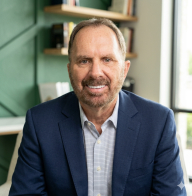
Written by
Leaman Griffin
Fractional Sales Leader, Fractional Uplifts
Fractional sales leader with 30+ years of B2B experience — from individual contributor to VP of Sales to Divisional President. Leaman has built and scaled sales teams from 1 to 100+ reps across distribution, manufacturing, and professional services. He works embedded with Louisville-area founders and executives who need experienced sales leadership without the full-time cost.
More about Leaman

