
What Louisville's Winning Sports Culture Can Teach B2B Founders About Building a Sales Team
Louisville doesn't just watch sports — it lives them. The Cardinals, the Kentucky Derby, Muhammad Ali. What made each legendary wasn't raw talent. It was system, coaching, and knowing exactly when to bring in the right specialist. B2B founders scaling past $5M face the same challenge.


Louisville has a complicated relationship with winning.
Not the kind of winning that happens by accident — the kind that gets built. Deliberately. Over years. With the right people in the right roles at the right time.
Think about what this city has produced:
- The Kentucky Derby — the most meticulously prepared two minutes in sports. Owners, trainers, jockeys, veterinarians, nutritionists. An entire ecosystem of specialists, each doing exactly one thing exceptionally well.
- Muhammad Ali — one of the most celebrated athletes who ever lived. But Ali didn't become Ali alone. Angelo Dundee coached him. Drew Bundini Brown motivated him. A whole corner team managed his performance so he could focus on fighting.
- The Louisville Cardinals — a program that has competed at the highest levels of college basketball and football not because of one transcendent recruit, but because of coaching systems that develop talent year after year.
The pattern is the same every time: talent gets you in the room. Systems and coaching get you the championship.
So why do so many Louisville B2B founders keep trying to win with talent alone?
The Founder's Instinct: Hire a Player
When revenue stalls — usually somewhere between $3M and $5M — the instinct is almost universal: hire a salesperson.
It makes sense on the surface. You need more sales. Sales people sell things. Hire a sales person.
But watch what actually happens:
You hire someone with a strong resume. You give them a territory, a CRM login, and a quota. You expect them to figure it out. Six months later, they're underperforming. You're frustrated. They're frustrated. You part ways and start the search again.
This isn't a talent problem. It's a coaching problem.
You hired a player without building the system they needed to succeed.
What Championship Programs Actually Do
Here's what separates a program like Kentucky Derby racing from a one-off bet:
They define the process before they recruit the talent.
A Derby trainer doesn't find a promising horse and then figure out how to train it. They have a methodology — a system for conditioning, nutrition, race preparation, and performance management — and they find horses that fit that system.
The same principle applies to B2B sales.
Before you hire your next sales rep, you need:
- A defined sales process — how does a prospect move from first contact to closed deal?
- A qualification framework — what makes a lead worth pursuing?
- A pipeline structure — what stages exist, and what has to happen at each one?
- A compensation plan — one that rewards the behaviors you actually want
- A coaching cadence — how will you develop this person over time?
Without these, you're not building a sales team. You're running a series of expensive experiments.
Ali's Corner: The Case for a Specialist
Muhammad Ali was among the most gifted fighters of his generation. But even Ali needed a corner.
Angelo Dundee didn't fight. He coached. He watched patterns, identified weaknesses in opponents, adjusted strategy between rounds, and kept Ali mentally sharp when the fight got hard.
That's exactly what a fractional sales leader does for a growing Louisville B2B company.
You don't need someone to carry a bag and make cold calls. You need someone who has built sales teams before — who can look at your pipeline, your process, and your people and tell you exactly what needs to change.
The difference between a sales rep and a fractional sales leader is the difference between a fighter and a corner man. Both matter. But if you're trying to scale, you need the corner first.
The Cardinals Model: Develop, Don't Just Recruit
One of the most consistent things about successful college programs is their emphasis on player development over pure recruiting.
Yes, you want talented players. But the programs that win year after year are the ones that take good players and make them great — through coaching, film study, practice systems, and accountability structures.
In B2B sales, this translates directly:
Stop looking for the perfect sales hire. Start building the system that develops good salespeople into great ones.
This means:
- Regular one-on-ones focused on skill development, not just pipeline review
- Call recording and coaching — listening to what's actually happening in conversations
- Clear metrics that measure activity and outcomes, not just revenue
- A culture where losing a deal is a learning opportunity, not a firing offense
Most founders don't have time to build this. They're running the business. That's exactly why a fractional sales manager exists.
What This Looks Like in Practice
A Louisville professional services firm was stuck at $4.2M for two years. They had hired three salespeople in that time. All three had left — not because they were bad at sales, but because there was nothing for them to operate in.
No defined process. No pipeline structure. No coaching. Just a quota and a prayer.
When they brought in a fractional sales leader, the first 90 days weren't about hiring. They were about building:
- A documented sales process tailored to their specific buyer
- A CRM structure that actually reflected how deals moved
- A compensation plan that rewarded the right behaviors
- A weekly rhythm of pipeline reviews and coaching conversations
Once the system existed, they hired two new reps into it. Same profile of candidate as the three who had left — similar backgrounds, similar experience levels.
By month four, both were hitting quota consistently.
The talent wasn't different. The system was.
The Louisville Advantage
There's something about this city that understands what it takes to build something that lasts.
The Derby doesn't happen by accident. Ali didn't become Ali by accident. The Cardinals don't compete year after year by accident.
Neither does a $10M B2B company.
If you're a Louisville founder who's been trying to solve a sales problem by hiring more salespeople, it might be time to think like a coach instead of a recruiter.
Build the system. Develop the talent. Bring in the right specialist at the right time.
That's how championships get won — in sports and in sales.
Fractional Uplifts works with Louisville B2B companies between $2M and $15M who are ready to build a sales system that scales. If you're tired of the hire-fire-repeat cycle, let's talk.
Related reading: The Evolving Louisville B2B Sales Landscape · Why Louisville Founders Keep Hiring Sales Reps Too Early
Also see:
Explore Topics
Written by
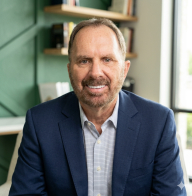
Leaman Griffin
Fractional Sales Leader, Fractional Uplifts
Fractional sales leader with 30+ years of B2B experience — from individual contributor to VP of Sales to Divisional President. Leaman has built and scaled sales teams from 1 to 100+ reps across distribution, manufacturing, and professional services. He works embedded with Louisville-area founders and executives who need experienced sales leadership without the full-time cost.
More about Leaman

