
Fractional Sales Manager for Louisville Distribution Companies
Louisville's distribution sector spans warehousing, fulfillment, cold storage, ecommerce distribution, and industrial supply — and the sales motion is more complex than most operators realize. Here's how a fractional sales manager builds the infrastructure to compete and win.


Louisville's distribution sector does not get the same attention as its logistics and freight operations, but it is one of the most economically significant parts of the regional economy. Warehousing, fulfillment, cold storage, ecommerce distribution, industrial distribution, and third-party fulfillment operations collectively employ tens of thousands of people in the metro area and generate billions in annual revenue.
For the founders and operators running mid-sized distribution businesses in this market, the sales environment is demanding in ways that are specific to the industry. The deals are large, the commitments are long, and the buying process is genuinely complex. Prospects are not just evaluating price — they are evaluating whether they can trust you with their inventory, their customers, and in some cases their entire fulfillment operation.
That complexity creates a specific sales challenge. And it is one that most distribution companies are not equipped to handle well.
Why Distribution Sales Is Different
Distribution sales has a longer, more consultative buying process than most B2B categories — and for good reason.
When a prospect is evaluating a warehousing partner, a third-party fulfillment provider, or a cold storage operator, they are making a decision with significant switching costs. It is worth noting that in third-party fulfillment, the inventory typically belongs to the customer — not the operator — which means the prospect is entrusting you with assets they own and cannot afford to misplace or mishandle. Moving that inventory to a new facility, integrating with a new warehouse management system, retraining staff on new processes — these are not decisions that get reversed easily. A buyer who makes the wrong choice is looking at months of disruption and real financial cost.
That means the sales process is not just about price and capacity. It is about trust, operational credibility, and the buyer's confidence that your team can execute at the level they need. Prospects ask harder questions. They want facility tours, reference calls, and detailed operational reviews. They involve more stakeholders — operations, finance, IT, sometimes the CEO. The diligence process is longer and more rigorous than in most industries.
For distribution companies selling into ecommerce brands, the stakes are even higher. An ecommerce brand that hands over its fulfillment operation is betting its customer experience — and its reputation — on your ability to pick, pack, and ship accurately and on time. That is not a decision they make lightly, and it is not one they make quickly.
For industrial distributors, the dynamic is different but equally demanding. Selling MRO supplies, safety products, or specialty components to manufacturing facilities, construction companies, or healthcare systems means navigating long procurement cycles, vendor approval processes, and multi-stakeholder buying committees. The rep who wins these accounts is not the one with the lowest price — it is the one who builds the deepest relationships and demonstrates the most operational reliability over time.
Cold chain and temperature-controlled distribution adds another layer. Prospects in food and beverage, pharmaceuticals, and life sciences are dealing with regulatory requirements, product liability, and compliance standards that make vendor selection a formal, documented process. The sales cycle reflects that reality.
The Sales Infrastructure Gap
Most Louisville distribution companies at the $3M to $15M revenue range are running sales the same way they ran it when they were half that size: the founder or a senior operator carries the relationships, deals come in through referrals and industry connections, and there is no formal process for generating new business or expanding existing accounts.
The referral network has limits. At some point, the warm introductions run out and the business needs to generate new relationships through outbound prospecting, targeted account development, and systematic follow-up. These activities require a sales process and a sales team — neither of which most founder-led distribution companies have sufficiently built.
The sales motion is also more complex than most founders realize. A distribution prospect moving through a genuine evaluation process needs to be managed carefully. Discovery conversations need to surface the right operational requirements. Facility tours need to be positioned as proof points, not just hospitality. Reference calls need to be set up with the right customers. Proposals need to address the specific concerns that came up in discovery. Each stage requires a different skill set and a different approach — and without a manager who has run this process before, reps either rush it or stall it.
The result is a pipeline full of deals that should close but do not. Prospects who were genuinely interested go quiet. Follow-up is inconsistent. The rep does not know how to re-engage a deal that has gone cold, or how to advance a conversation that has been stuck at the same stage for three months.
What Sales Infrastructure Looks Like in Distribution
For a Louisville distribution company, the sales infrastructure that breaks this pattern has several specific components.
A defined ideal customer profile. Not every prospect is worth pursuing. Distribution companies that try to serve everyone — any size, any vertical, any geography — end up with a fragmented customer base that is hard to serve well and harder to sell to efficiently. A fractional sales leader helps define the specific customer profile that the company wins most consistently: the right verticals (ecommerce, food and beverage, industrial, pharmaceutical, retail), the right size range, the right operational requirements. That clarity makes prospecting more efficient and closing rates higher.
A consultative discovery process. Distribution sales is won or lost in discovery. The rep who asks the right questions — about current pain points, operational requirements, growth trajectory, incumbent relationships, and decision-making process — is the one who can position the company's capabilities as the right solution. Without a structured discovery framework, reps either talk too much about their own capabilities or fail to surface the information they need to close. A fractional sales leader builds the discovery framework and coaches reps to use it consistently.
A pipeline process built for long, multi-stakeholder sales cycles. Distribution deals do not usually close in a single meeting. The pipeline process needs to account for the full arc of the buying process — from initial contact through discovery, facility tour, reference checks, proposal, negotiation, and close. Each stage needs clear criteria for advancement, defined next steps, and a follow-up cadence that keeps the deal moving without pushing the prospect away. This is where CRM discipline becomes critical. A CRM that accurately reflects where every deal stands, who the stakeholders are, what the next action is, and when it is due is not optional in distribution sales. It is the difference between a pipeline that converts and one that leaks.
Coaching on distribution-specific objections. Pricing pressure from national competitors. Concerns about capacity or geographic coverage. Questions about WMS integration and technology compatibility. Incumbent relationships with existing providers. Every distribution sales rep encounters these objections repeatedly. Without a manager who has heard them before and can coach the rep on how to handle them, reps either cave on price or lose deals they should win on value. A fractional sales leader who understands distribution sales brings the objection-handling frameworks that turn these conversations from losses into wins.
Account expansion discipline. In distribution, the initial contract is rarely the full opportunity. A customer who starts with one product line, one facility, or one service offering can grow into a much larger relationship over time — if the sales process includes a systematic approach to account expansion. Most distribution companies leave this to chance. A fractional sales leader builds the account expansion process that turns initial wins into long-term, growing relationships.
For a detailed look at what this infrastructure looks like in practice, read The Complete Guide to the Fractional Sales Manager Model.
The Verticals Driving Louisville Distribution Growth
Louisville's distribution sector spans several distinct verticals, each with its own sales dynamics.
Ecommerce fulfillment has grown significantly in the Louisville market, driven by the region's geography and air cargo infrastructure. Ecommerce brands evaluating fulfillment partners are sophisticated buyers — they know their order volumes, their SKU counts, their peak season requirements, and their customer expectations. Selling to them requires operational credibility, technology fluency, and the ability to speak their language. The sales cycle is consultative and detailed, but the accounts are high-value and sticky once won.
Food and beverage distribution — including cold chain and temperature-controlled operations — is one of the most demanding sales environments in the industry. Buyers are dealing with regulatory requirements, product liability, and compliance standards that make vendor selection a formal process. The rep who wins these accounts is the one who demonstrates operational expertise and regulatory knowledge, not just competitive pricing.
Industrial and MRO distribution serves the manufacturing, construction, and facilities management sectors that are core to Louisville's economy. These accounts are won through relationship depth and service reliability. The sales cycle involves procurement processes, vendor approval requirements, and multi-stakeholder buying committees. Reps who succeed in this vertical are patient, relationship-oriented, and disciplined about long-term account development.
Pharmaceutical and life sciences distribution is a smaller but high-value segment in the Louisville market, driven by the region's healthcare and life sciences presence. The compliance requirements are stringent, the buying process is formal, and the switching costs are high — which means accounts are hard to win but extremely sticky once established.
Retail and consumer goods distribution serves the regional retail and wholesale market. These accounts often involve complex logistics requirements, seasonal volume fluctuations, and multi-location distribution needs. The sales process requires a thorough understanding of the customer's supply chain and the ability to position distribution capabilities as a strategic advantage, not just a commodity service.
Building materials and construction supply distribution has grown alongside Louisville's construction and development activity. These accounts are relationship-driven and operationally demanding, with buyers who prioritize reliability and responsiveness along with price.
The Case for Fractional Over Full-Time
Distribution sales leadership is a specific skill set — and a full-time hire with genuine experience running consultative, multi-stakeholder distribution sales in the Louisville market commands $130,000 to $190,000 in base salary before benefits and recruiting costs. That is a significant commitment for a company doing $5M to $8M in revenue, and the 12 to 18 month evaluation window is a long time to wait when the business needs pipeline momentum now.
There is also a subtler risk that most distribution founders underestimate: a full-time sales leader hired too early often defaults to managing existing accounts rather than building the prospecting and pipeline infrastructure the business actually needs. The hire feels productive because the relationships are warm — but new business generation stalls.
A Fractional Sales Manager engaged on a monthly retainer is structured differently. The engagement is defined around building infrastructure — the ICP, the discovery process, the pipeline stages, the CRM discipline, the coaching cadence — not maintaining what already exists. The business gets the process-building work done at a cost it can sustain, and the infrastructure it builds makes every future full-time hire more likely to succeed.
For a breakdown of what this costs and how to evaluate the ROI, read How Much Does a Fractional Sales Manager Cost?.
When to Make the Move
Distribution companies tend to recognize the need for a fractional sales manager when one of three specific patterns becomes clear.
New business has dried up and the pipeline is mostly existing accounts. The business is retaining customers reasonably well but not generating new relationships at a meaningful rate. The founder's network has been tapped. The referrals have slowed. There is no outbound process, no prospecting discipline, and no system for converting cold relationships into warm ones. Revenue is flat or growing only as fast as existing accounts grow.
Deals are stalling in the evaluation process. Prospects who completed facility tours and reference calls have gone quiet. Proposals have been submitted but not followed up on systematically. The rep does not know how to re-engage a deal that has been stuck for two months or how to advance a conversation that has been warm but not moving. This is a pipeline management problem, not a rep quality problem.
The founder is the only person who can close a deal above a certain size. Smaller accounts close without the founder's involvement. Anything significant — a new ecommerce brand, a major industrial account, a pharmaceutical distribution relationship — requires the founder in the room. That pattern does not change by hiring another rep. It changes by building a sales process that gives reps the tools to close complex deals independently.
If any of these describe your situation, read Top 10 Signs Your Business Is Ready for a Fractional Sales Manager for a detailed look at the signals.
The Bottom Line
Louisville's distribution market is large, growing, and competitive. The demand is real. The accounts are valuable. The geography is right.
What most mid-sized operators are missing is the sales infrastructure to compete consistently against larger players with dedicated sales teams and sophisticated processes. The fractional sales manager model closes that gap — at a cost that makes sense for the stage of the business.
Contact Fractional Uplifts to talk through what this looks like for your distribution company. Or book a discovery call to walk through the specific gaps and what it would take to close them.
Related Reading
- Why Smaller Louisville B2B Companies Struggle to Scale Past $5M
- Louisville Sales Recruiting vs. Fractional Sales Manager
- Fractional Sales Manager for Louisville Logistics Companies
- The Complete Guide to the Fractional Sales Manager Model
- What to Expect in the First 90 Days with a Fractional Sales Manager
Related reading: The Evolving Louisville B2B Sales Landscape · Louisville B2B Sales Challenges in 2026
Also see:
Explore Topics
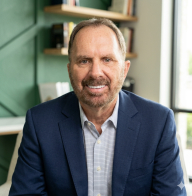
Written by
Leaman Griffin
Fractional Sales Leader, Fractional Uplifts
Fractional sales leader with 30+ years of B2B experience — from individual contributor to VP of Sales to Divisional President. Leaman has built and scaled sales teams from 1 to 100+ reps across distribution, manufacturing, and professional services. He works embedded with Louisville-area founders and executives who need experienced sales leadership without the full-time cost.
More about Leaman

