
How Much Time Should a Sales Manager Spend Coaching?
The benchmark is 3–5 hours of coaching per rep per week. Most full-time sales managers never hit it. Here's why — and what it costs your team.


The Question Behind the Question
"How much time should a sales manager spend coaching?" is the right question to ask. But before you benchmark hours, there's a more important question underneath it: is your current structure capable of delivering real coaching at all?
Most aren't. And the problem isn't the manager.
What the Research Actually Says
Studies on sales coaching consistently point to a simple finding: more frequent, focused coaching produces better rep performance. Reps who receive regular one-on-one coaching — call reviews, skill-building conversations, deal strategy — improve faster and sustain higher quota attainment than those who don't.
The research doesn't prescribe a magic number of hours. What it shows is that consistency and quality matter more than raw time. A manager who has one sharp, prepared coaching conversation per rep per week outperforms a manager who logs more hours but fills them with pipeline status updates dressed up as coaching.
The problem is that most full-time sales managers can't deliver either.
Where a Full-Time Manager's Week Actually Goes
A full-time sales manager's schedule doesn't belong to their reps. It belongs to the organization.
Here's a realistic breakdown of where those 40+ hours go:
- Internal meetings: pipeline reviews, leadership syncs, cross-functional calls — 8 to 12 hours per week
- CRM and reporting: updating forecasts, pulling numbers, building decks for leadership — 5 to 8 hours
- Recruiting and HR: job postings, interviews, onboarding, performance documentation — 3 to 6 hours depending on the quarter
- Deal escalations: getting pulled into late-stage deals, handling objections, covering for reps — 4 to 6 hours
- Administrative overhead: expense approvals, territory disputes, comp plan questions — 2 to 4 hours
That's 22 to 36 hours of non-coaching work before the week even starts. Whatever time is left gets spread thin across a team of six or more reps.
The result: coaching gets compressed into the only format that fits — the deal review. A manager asks "where are we on this account," listens to a status update, offers a suggestion. The rep nods. The meeting ends.
That's not coaching. That's a pipeline check with a coaching label on it.
What Real Coaching Actually Looks Like
Real coaching is specific, prepared, and skill-focused:
- Reviewing a recorded call and identifying the exact moment the rep lost control of the conversation
- Role-playing a discovery call before a high-stakes meeting
- Working through why a rep's close rate drops after the second meeting and building a specific fix
- Helping a rep develop their own instincts rather than just telling them what to do
This takes preparation and mental bandwidth. It can't happen in the margins of a week already consumed by everything else.
The Fractional Difference Isn't Hours — It's Ratio
Here's where the fractional model gets misunderstood.
A fractional sales manager works fewer total hours with your company than a full-time hire. That's obvious. But the question isn't how many hours they work — it's what percentage of those hours go toward work that actually moves rep performance.
A full-time sales manager might have 40 hours available and deliver a few hours of real coaching across the whole team. The rest goes to overhead the organization requires.
A fractional sales manager's engagement is scoped differently. They're not attending every internal meeting. They're not building board decks. They're not getting pulled into HR conversations or expense approvals. When they're with your team, they're doing sales leadership work — coaching, pipeline discipline, process improvement, rep development.
The ratio of coaching to overhead looks fundamentally different. Not because fractional managers are better coaches, but because the structure doesn't consume them the same way.
That's the real answer to the time question. It's not about hitting a specific number of hours. It's about whether the structure you've built allows coaching to happen at all — or whether it crowds it out before the week even starts.
Signs Your Team Isn't Getting Enough Coaching
If you're not sure whether your current structure is delivering, look for these patterns:
Rep performance is flat despite experience. The sales leadership playbook covers what a functioning coaching cadence looks like inside a structured SMB sales operation. The sales leadership playbook covers what a functioning coaching cadence looks like inside a structured SMB sales operation. Reps who've been on the team 12 to 18 months should be improving. If they're not, the feedback loop is broken.
Every rep sells the same way. A well-coached team develops individual strengths. If everyone runs the same script with the same results, coaching isn't happening at the individual level.
Your manager can't explain why a rep is struggling. If the answer is "they just need to make more calls," that's not a diagnosis. That's a coaching gap.
Win rates haven't moved in two or three quarters. Coaching should improve close rates over time. Flat win rates are a structural signal, not a rep problem.
The Right Conversation to Have
The question isn't just how many hours your sales manager spends coaching. The better question is: given how their time is actually structured, is real coaching even possible?
If the honest answer is no — if the role has been consumed by meetings, reporting, and overhead — then the fix isn't asking your manager to do more. It's changing the structure.
That's the conversation worth having.
Fractional Uplifts provides fractional sales management to B2B companies in Louisville and across the region. If your team isn't getting the coaching it needs, let's talk.
If your manager does not have the time or the infrastructure to run a consistent coaching cadence, a sales coaching engagement can provide the coaching function directly — or build the system so your manager can run it.
Also see:
Explore Topics
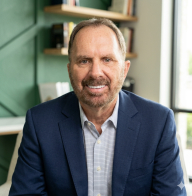
Written by
Leaman Griffin
Fractional Sales Leader, Fractional Uplifts
Fractional sales leader with 30+ years of B2B experience — from individual contributor to VP of Sales to Divisional President. Leaman has built and scaled sales teams from 1 to 100+ reps across distribution, manufacturing, and professional services. He works embedded with Louisville-area founders and executives who need experienced sales leadership without the full-time cost.
More about Leaman

